Feeds:
Posts
Comments

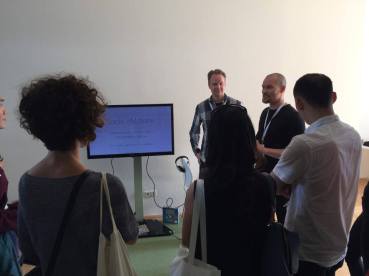
The Colloquium for Interdisciplinary Music Research has started again. We have currently two sub-colloquia, one for empirical music research and another that focuses on music and emotion.

The Empirical Colloquium convened last Thursday to discuss Tuukka Tervo’s work on sensory dissonance models. Sensory dissonance is the sensation of roughness or discord that we can have when hearing two or more notes. The “sum”, or compound of the notes can sound unpleasant or tense, instead of pleasant and clear like in the opposite case of consonance. Traditionally, intervals such as octaves, fifths and fourths have been considered consonant, while sevenths, seconds and even thirds have been dissonant.

There are two aspects in this perception of dissonance, the cultural one (we are used to certain kinds of tone combinations and tuning systems, and judge those we find pleasurable as “consonant”, and those that we find tense or unfitting in the context as “dissonant”) and the sensory, psychoacoustical one. The latter, where the degree of dissonance can be measured from the acoustical components of the sound stimulus and the physical properties of our auditory perception system, was on the table last Thursday.

There are many models of how to calculate how dissonant a certain compound of notes, or a certain passage of music is. This is considered an important factor in how the piece of music would be perceived, remembered or categorised, and therefore an interesting topic for music research and for instance the applied field of music information retrieval.

Tuukka has tested various models of sensory dissonance by comparing their results with the judgements of dissonance made by music students. He used real musical material; chords, drone music and piano jazz, and has now performed the experiment and a preliminary analysis. You can read about both in the embedded presentation. This work is part of Tuukka’s master’s thesis, due for completion next year.

Korppi ja eHOPS

Kaikki opiskelijat tekevät nykyään henkilökohtaisen opintosuunnitelman (HOPS). Tämä suunnitelma tehdään opintotietojärjestelmä Korpissa sähköisesti (eHOPS). Systeemi on hankala käyttää ja esimerkiksi sivuaineopintojen lisäämisessä on monia vaiheita, joista osa on suorastaan epäloogisia. Yritän tässä selvittää tuon sivuaineopintojen lisäämisen sekä valmiin suunnitelman saamisen ohjaajalle hyväksyttäväksi. Yhtenä ongelmana ohjeiden antamisessa on se, että Korppi näyttää erilaiselta opettajalle kuin opiskelijalle, joten alla olevat ruutukaappaukset ovat lähinnä suuntaa-antavia. Continue Reading »

The long-awaited Google Wave invitation finally arrived this week. We had talked about it with Olivier, as judging by the previews, it looked like just the tool for our research group’s planning and communication needs.

Google Wave has been hyped up and so the queue to get to test it was long. And it seems people are desperate to get in on the fun as early as possible, and therefore the competition for invites was fierce, and lots of phishing sites and other scams were quickly setup. Email and twitter ID’s of those who were foolish enough to give out their details to websites promising invites in return of those details and re-tweeting the site URL were harvested – I’m not sure for what purpose, to be sold to spammers, I suppose.  Continue Reading »

Virtually academic

MATLAB Virtual Conference Networking Lounge

MATLAB Virtual Conference Networking Lounge

So, yesterday’s MATLAB Virtual Conference was fun. The venue is still open, people are still hanging out there, filling in user surveys, downloading materials and chatting to each other. Can’t help but think that the people still around are those whose flights back home are later today… :)

As I said yesterday, this is, and has to be the Future. It’s not the real thing, but it comes pretty darn close at some respects. Listening to a talk online is very close to listening to a talk live. A lot of the “content” of a conference can be relayed virtually, and some of the social interaction could be simulated as well. But crucially, I think we need to rethink what conferences are, in order to be able to organise good virtual ones.

Conference talks and sessions, exhibition halls and networking spaces (as above, note that the people in these pics are just a background pics, not actual avatars) are useful analogies to real conferences as they help us navigate the virtual environment. But, and I think this was done well by UNISFAIR, it is crucial to focus on the strengths of the tools that are in use and not try to stretch these analogies too far. People attend a virtual conference with different expectations than an actual, physical event.

We could have an ongoing virtual conference, or a virtual common room, centered around a discipline or a research problem. There could be weekly seminars, papers and code could be disseminated, projects planned and carried out. Or, there could be a one-off event that would be run as a conference in terms of academic protocol, with calls for papers, peer review of presentations and proceedings. All these can be “souped up” with filesharing and collaboration tools that would bring advantages to compensate for the disadvantages of virtuality.

So, perhaps these are good when the event needs to be scaled up to a size that would not fit in an actual venue; or when people already know each other and can therefore interact effortlessly virtually; or when the geographic spread of the participants would make actual meetings very expensive; or when the focus is in producing solutions and exchanging materials.

Overall, I think the MATLAB VC was a fun experience. What they could do next time is somehow grade the sessions based on how elementary or advanced they are. Some were aimed for people who have never even seen the software before, while others were much more complicated. Would have been good to have some indication of this beforehand.

Perhaps the most useful bit was this link that I picked from the networking area discussion. And I also learned that people play MATLAB Golf, where the idea of the game is to solve a certain programming problem with the least number of characters in your code. :)

MATLAB Virtual Conference

Technology is awesome. The high point of geekism and nerdity of this year is the MATLAB Virtual Conference. This, I dare to predict, is The Future. As flying across the world is increasingly difficult to justify for environmental reasons, building virtual meeting places and having virtual gatherings and learning to work in online communities is the way to collaborate from at home.

I still think that nothing replaces actual, face-to-face interaction and I do think we need more of that, not less, but there are many occasions where less interaction will do. The MATLAB Virtual Conference is today, and it is a lot of fun. Well, “fun” in my geeky standards, at least. There are more than 7000 registered participants from all over the world. I’d like to see an actual conference with this kind of attendance… There are conference talks in parallel sessions, there is an exhibition hall where you can visit exhibition booths, chat with presenters and other guests, and you can network using various tools that are similar to any social network. Presentations can be downloaded or saved to conference briefcase, at exhibition hall there are videos and links…  You can also ask questions after the presentations using a simple form that attaches your business card to the question, so that the presenter knows who is asking what. The presenters are then available for one-on-one chats at the exhibition booths afterwards, much like in actual conferences you can go and talk to people at coffee breaks.

This event is organised by MATLAB and it is their PR event more than an actual academic conference with CFP’s and speakers from various different institutions. However, the platform for this conference, by UNISFAIR could well be used for that.

There’s now a lecture starting on developing algorithms for MATLAB, so I’ll go to the conference room to join in the fun. And just for fun, here are some screenshots of the virtual venue.

Exhibition hall of the MATLAB Virtual Conference

Exhibition hall of the MATLAB Virtual Conference

Exhibition booth of MATLAB Virtual Conference

Exhibition booth of MATLAB Virtual Conference

Conference Hall of the MATLAB Virtual Conference

Conference Hall of the MATLAB Virtual Conference

Musiikkia tiedelingossa

Areena_logo Yksi YLE:n parhaista podcasteista on Tiedelinko – tiedemakasiiniohjelma, jossa on haastatteluita, juttuja ja uutisia tieteenalojen laidasta laitaan. Ohjelmassa on käsitelty musiikintutkimusta useaan otteeseen, ja monet huippuyksikön tutkijoista ovat olleet radioaalloilla kertomassa tutkimuksistaan.

Viimeaikaisissa jaksoissa on kuultu mm. Miika Lemistä puhumassa musiikin aivotutkimuksesta EEG:n avulla (jakso Musiikin tutkimusta aivoissa ja konserttisaleissa) sekä Minna Huotilaista ja Riia Milovanovia puhumassa musiikin vaikutuksista tarkkaavaisuuteen ja vieraiden kielten oppimiseen (jakso Muikkukantojen kehityksestä, jossa segmentti näistä aiheista). Ohjelmat ovat YLE Areenassa vain rajatun ajan, joten kannattaa laittaa tuo podcast tilaukseen ja seurata tiedeuutisia huippuvuorilta musiikin havaitsemisen kautta Jane Austeniin.

(Kertoo ehkä jotain siitä, miten radionkuuntelu on muuttunut, että vasta näitä linkkejä hakiessani tulin edes ajatelleeksi, että kyse on YLEn Radio Ykkösen ohjelmasta. En itse asiassa edes tiedä, mitä radiokanavia YLEllä ylipäänsä on… Selaan vain Areenaa aihepiiri ja ohjelma kerrallaan. Vieläkään mulla ei ole hajua siitä, milloin Tiedelinko oikeasti esitetään radiossa, koska kuuntelen näitä tosiaan podcasteina, jotka päivittyvät iPodiin aina akkujen lataamisen yhteydessä.)

Yksi syksyn “uusista” kursseista alkoi eilen. Laajentumisen myötä Näkökulmia musiikintutkimukseen on nyt jaettu kahteen kurssiin, joista syksyn aluksi käydään ensin käsiksi kognitiivisen musiikintutkimuksen perusteisiin (MUSP041). Tämän jälkeen, myöhemmin syksyllä tutustutaan Humanistiseen musiikintutkimukseen (MUSP042). On tietysti jossain määrin arveluttavaa jakaa musiikintutkimuksen kenttä kahtia näin, mutta toisaalta vertailu on hyvä tapa nähdä sisälle tutkimustyön perusteisiin.

Olen tyytyväinen, että luonnontieteellinen musiikintutkimus saa näin lisää tilaa myös musiikkitieteen perusopinnoissa. Nyt on mahdollista pureutua mm. akustiikan ja psykoakustiikan perusteisiin heti opintojen alusta alkaen, ja rakentaa kumuloituvasti polkuja kohti esimerkiksi sellaista tutkimustyötä, jota huippuyksikössämme tehdään. Continue Reading »

Uusi lukuvuosi alkaa!

pihlajat

Tervetuloa uudet ja vanhat opiskelijat! Uusi lukuvuosi käynnistyy tänään yliopiston avajaisilla ja opetus pyörähtää käyntiin ensi viikolla. Tämäkin blogi heräilee taas kesähorroksestaan.

Vaikka kunkin kurssin Optima-tila on se ensisijainen paikka, jonne laitan kurssimateriaalit, luentokalvot ja tekstit, on täälläkin joskus täydentävää aineistoa. Optima-tilat ovat suljettuja, eli ne avautuvat vain kullekin kurssille ilmoittautuneille opiskelijoille. Tämä on hyvä, koska näin voidaan jakaa vain kurssin käyttöön tarkoitettua materiaalia, jota ei esimerkiksi tekijänoikeussyistä voitaisi laittaa yleiseen jakoon. Tuo suljettuus on kuitenkin myös rajoite, ja siksi postailenkin esimerkiksi luentokalvoja myös tänne – laitan ne usein myös SlideShareen, joka on moiseen oiva palvelu.

Täällä voin myös jatkaa luennoilla alkaneita keskusteluita, tai antaa vastauksia kysymyksiin, joihin en luennolla ole osannut vastata. Kysymyksiä voi myös esittää täällä, toivon, että tämä kehittyy myös vuorovaikutuskanavaksi, vaikka sähköposti onkin toki nopein tapa tavoittaa, mikäli kysymys on kiireellinen.

Pari sanaa tulevan lukuvuoden kursseistani. Johdatus musiikintutkimukseen (MUPP021) on nimensä mukaisesti johdantokurssi musiikintutkimukseen yleensä. Tämän kurssin voi suorittaa myös kirjatenttinä yliopiston uudessa e-tenttitilassa pääkirjastossa. Lisätietoja tästä saadaan kohta, kunhan rehtori ehtii ensin tämän kohta alkavassa avajaispuheessaan virallisesti julkistaa!

Tieteellisen tutkimuksen perusteet (MUPP011) jatkuu toisessa periodissa Johdatuksen jälkeen. Tämä on vanhojen tutkintovaatimusten se Tutkijan taidot I -kurssi, jossa tehdään pienimuotoinen oma tutkimus ja esitelmöidään siitä muille ryhmäläisille. Tämän työn pohjalta tehdään sitten kirjoitusviestinnän työ, jonka kielentarkastuksesta vastaa Kielikeskuksen Timo Nurmi. Tämän kurssin koodi on XKVH006 ja sen virallinen nimi on Musiikkitieteen tutkimusviestintä.

Näkökulmia musiikintutkimukseen (MUSP040) on laajentunut viimevuotisesta, mutta sen idea on edelleen sama. Riitta Rautio opettaa humanistiseen tutkimustraditioon pohjautuvaa musiikintutkimusta ja minulla on luonnontieteellinen näkökulma puolustettavanani. Tällä kurssilla opetan siis alkeita akustiikasta, psykoakustiikasta, musiikin havaitsemisesta ja esittämisestä (kognitiivisesta näkökulmasta, siis) sekä musiikista ja evoluutiosta. Lisääntynyt opintopistemäärä mahdollistaa hieman pintaraapaisua paremman otteen, mutta kyse on kuitenkin perusopintotasoisesta kurssista – näitä teemoja kuitenkin laajennetaan ja syvennetään sitten aineopinnoissa tulevina vuosina.

Tutkijan taidot II (MUSA010) onkin tänä vuonna varsinainen kompleksi. Proseminaari ja kandidaatintutkielma on aina tehty käytännössä yhtä aikaa, niin nytkin. Noiden kahden kurssin välinen opintopistesuhde on hieman keikahtanut, mutta tämä ei näy käytännössä mitenkään. Sen sijaan uutta on se, että nyt myös aineopintojen metodikurssi Laadulliset ja määrälliset menetelmät (MUPA021) on integroitu samaan pakettiin. Vuosi alkaa ja päättyy seminaarina, mutta välissä tehdään tuo menetelmäpaketti, yhtä aikaa oman tutkimustyön kanssa. Lisäksi nyt suositellaan, että maturiteetti tehtäisiin heti tämän kurssin päätteeksi toukokuussa, ja tässä voidaan taas hyödyntää tuota pääkirjaston e-tenttitilaa.

Myös kollokviotoiminta jatkuu. Viime vuonna Empiirisen musiikintutkimuksen kollokvion nimellä kulkenut kollokvio jatkuu, tosin nimeä vaihtaneena. Monitieteisen musiikintutkimuksen kollokvio (MUSS016) on nimetty laitoksen huippuyksikön nimeä mukaillen, sillä tarkoitus on kytkeytyä hieman tiiviimmin sen kylkeen. Kollokvio lienee tänäkin vuonna sekakielinen, sillä mukaan on tarkoitus kutsua paitsi huippuyksikön tohtoriopiskelijoita myös uusia Music, Mind & Technology -ohjelmassa aloittavia opiskelijoita. Kollokviossa käydään edelleenkin siis läpi osallistujien omia tutkimuksia, kuullaan alustuksia ja käydään keskustelua tutkimuksen menetelmistä, tavoitteista ja tuloksista. Katsotaan, saadaanko viime vuonna aloitetut Sohwi-jälkilöylyt tänä vuonna jatkumaan.

Laitoksella tapahtuu opetuksen kehittämisessä ja viestinnässä paljon tänäkin vuonna. Viime lukuvuonna tehtiin uudet opetussuunnitelmat, kesällä on kirjoitettu opiskelun pelisääntöjä (piakkoin laitoksen verkkosivuilla, kohdassa Opiskelu -> Ohjeita opiskeluun), ja nyt työstetään opinto-ohjaukselle linjauksia, uutta avointa eHOPSia jne. Myös laatutyöryhmä on aktiivinen, ja niinpä onkin hyvä valmistautua tänä vuonna antamaan palautetta pyydettäessä ja pyytämättä ja tarkastelemaan laitoksen toimintaa kriittisellä mielellä. Monien kurssien ja toimintatapojen suhteen tehdään kokeiluja, ja meitä kiinnostaa tottakai tietää, miten nämä opiskelijoiden näkökulmasta ovat onnistuneet. Pidetään siis vuorovaikutuskanavat auki.

Oikein hyvää lukuvuoden alkua kaikille!


There were no keynotes on the last morning. Sunday started with the ESCOM General Assembly instead. Professor Reinhard Kopiez from Hannover University was elected as the new president of ESCOM. The incumbent president, prof Jukka Louhivuori from Jyväskylä, was elected new secretary general and editor of Musicae Scientiae, the journal of ESCOM. Jukka will thus take over Irène Deliège’s duties. Or rather, a team of people, led by Jukka will take over Irène’s duties, and part of them (regarding the journal) will hopefully be outsourced to a publishing house. She has dedicated so much time and effort to ESCOM, running it and the journal, that it will take several people to fill her shoes.

After the assembly, we had a full day of sessions ahead of us. I skipped the first set, as I was bound to present our paper in the afternoon session. The paper was with Marc Thompson, and titled Group synchronization of coordinated movements in a cross-cultural choir workshop. We presented a preliminary analysis of a motion capture study we conducted last summer with the Emmanuel Lutheran Choir. I wrote about it here at that time.

Now, as a brief summary – we are all happy but very tired. It has been an intensive two weeks in Jyväskylä, with the ISSSCCM summer school and then the ESCOM 2009 conference. We have enjoyed it, organising these things is demanding but rewarding, and the best reward must be to see people talk to each other, excited about finding new people who share their research interests and able to trade knowledge with them. The debates, the arguments, presentations and questions, the dinners, parties and early morning coffees – all essential forms of interaction between researchers that can not be replaced with electronic and virtual forms of communication. This was our version of a show – looking forward to future conferences, collaborations, conversations.

Thanks for coming, thanks for reading. Let’s keep in touch!

The double-bill of keynotes in the morning of the 4th day consisted of Minna Huotilainen’s and Gary MacPherson’s talks.

Minna Huotilainen: Young Children as Individual Musicians: A Neuroscientific Approach

Minna Huotilainen of the Helsinki-side of our Finnish Centre of Excellence presented methods and data of their studies on music perception in babies and toddlers. This research aims at mapping the development of music perception abilities by using neuroscientific methods, mostly EEG, and the event-related potentials (ERP) paradigm.

Studying brain responses of babies or toddlers is challenging, but potentially rewarding. Mapping how music-related processes develop in the maturing brain can tell us a lot about how the brain works and how music works in the brain. One of the difficulties is that for ERP-studies (that allow us to study time-locked brain responses to specific stimuli) is that for a good signal- to noise -ratio, the trials tend to get very long, especially if you want to test several features at once.

The idea here is to present repetitions of the standard stimulus, for instance a short melody, and then “oddballs”, melodies where a feature has been changed, or one aspect of the original violated – rhythm, melody, timbre, tuning etc. Then, brain responses to these changed stimuli are compared to the response to the standard, and so we can see which changes the brain is sensitive to. To test all these features, the experiment would be very long, but luckily the neuroscientists in Helsinki, led by prof Näätänen, have developed a multi-feature paradigm that is ideal for this purpose. In this paradigm, the stimulus (that the participant does not attend to, BTW, but it is presented in the background so that brains do the work without conscious efforts) is constructed to contain all these “violations” at a sequence, one at the time. So every iteration has a “violation” in one feature, but is “standard” with regards to the other features being tested. This means that the experiment can be much shorter, and that even younger kids can do it.

The result could probably be summarised in that babies have impressive capabilities for discriminating musical features. The group has compared those who like to sing at music playschool with those who tend not to be active singers, and also have constructed a study where 10-12 year old children who have music as their hobby were compared with a matched group who have other hobbies but don’t do music. This study showed benefits of musical training to attentive and perceptual tasks, compared to other non-musical hobbies. The differences were evident in for instance a language-related task of naming objects. The music-group responded faster and made fewer mistakes. At age 11, there were also differences in their ERP-responses to these stimuli, which were not there at the onset of training.

Minna Huotilainen also presented her theory on why music is so important in the first years of development. It is known that at that age the cortex is pretty much a work in progress, with very little connections between different parts of this part of brain. For the development of these cortico-cortical connections, it has been suggested that information input from the deeper areas of the brain is vital. Music is very good in activating those deeper parts, and perhaps this stimulation is beneficial for the development of connections in the cortex. She also speculated that the activity we measure in EEG or MEG from small childrens’ brains is actually originally activation of these deeper areas, projected through the cortex. This talk was full of very, very interesting stuff.

Gary MacPherson Music in our lives – Rethinking musical development, ability and identity

The second keynote was in the theme of music education, and given by professor Gary MacPherson, of University of Illinois at Urbana Champaign. His talk focused on motivation and its components in various stages of development. A good illustration of what music educators face every day was the clip from South Park, where the boys play Guitar Hero obsessively, because it is a game and very cool, but think that a real guitar is “gay”, and are not at all interested.

Another theme that has interested music education researchers is analysis of musical practice – especially the ration between effort and time versus the results. This has been shown to be a factor in how kids give up music, and it is also interesting how practice strategies differ. This theme was discussed in more detail in some other talks and posters in this conference.

MacPherson has been studying a young pianist, a child prodigy called Tiffany Poon. Again, what can we learn about one unusual case (think of Snowball) is perhaps debatable, but at least seeing a truly exceptional talent will make us rethink the rules and boundaries of human ability.

Conference dinner

Since so many people were expected to leave the conference on the final day, the conference dinner/farewell party was  scheduled for Saturday evening. Buses took the participants from their hotels to the venue, restaurant Rantasipi, Laajavuori. In addition to the dinner in good company, there were performances by Sinuhe, the Middle-Eastern/North African/Asian/eclectic band that is led by Pekka Toivanen from the Jyväskylä Music Department. There was also a short kantele concert and singing together. It was a nice party and the venue worked very well for this.  There was this conference-fatique setting in in the evening, but we had one more day to go…

Older Posts »